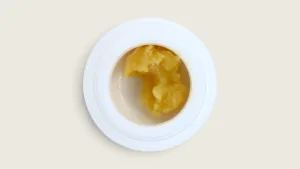
Full Spectrum vs Distillate: What Every Discerning Buyer Should Know
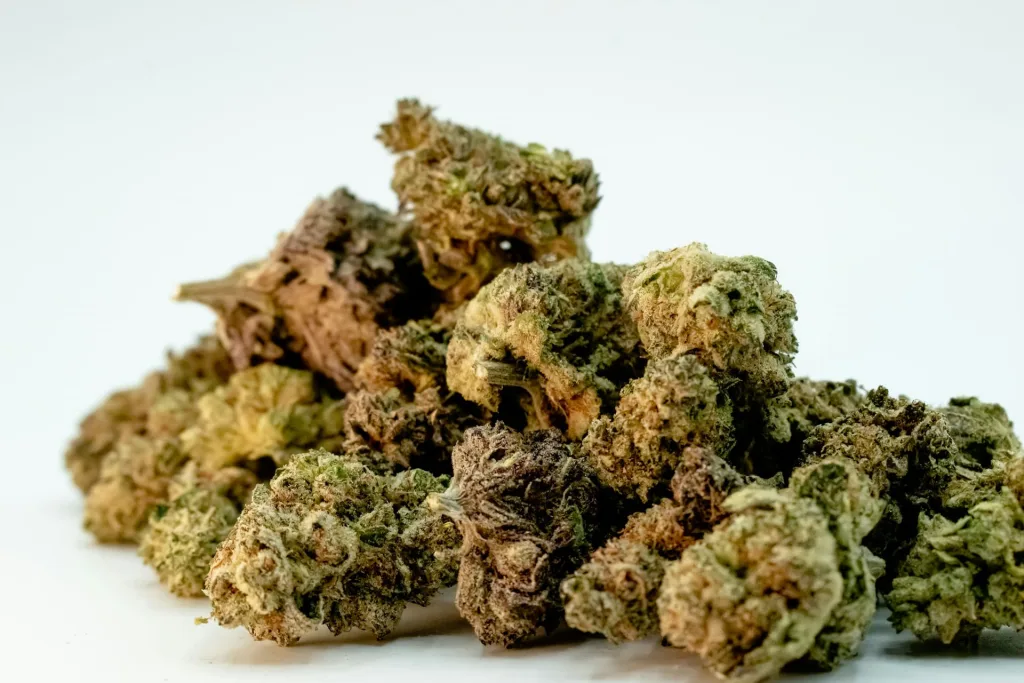
Key takeaways
- Full spectrum keeps the whole plant profile intact: cannabinoids, terpenes, and minor compounds together.
- Distillate is a highly refined, nearly pure THC (or CBD) oil with almost everything else stripped out.
- Full spectrum tends to smell and taste closer to real flower; distillate is flavourless and colourless on its own.
- Neither is objectively better, the right pick depends on what kind of experience you want.
- Knowing the difference saves you from buying a vape or edible that doesn’t deliver what you were expecting.
Full spectrum vs distillate comes down to one core question: do you want the whole plant in your product, or just the purified THC? Full spectrum keeps everything the plant made. Distillate strips it almost all away.
What “full spectrum” actually means
Full spectrum extract is pulled from the plant in a way that holds onto most of what was in the original flower: the main cannabinoids like THC and CBD, a wide range of minor ones, and crucially, the terpenes. Terpenes are the oily compounds that give each strain its distinct smell and flavour, the stuff that makes a Gelato smell like sweet cream and an OG Kush smell like earth and fuel. If you want to understand what cannabinoids actually are and how many exist, that’s worth a read on its own.
The idea behind keeping all of that together is that the compounds in cannabis don’t work in isolation. When terpenes, THC, CBD, and minor cannabinoids are all present at once, many people describe the experience as feeling rounder and more nuanced than straight THC alone. You’ll hear this called the “entourage effect”, it just means that the full cast of compounds from the plant seems to produce a different feel than any single one by itself.
Full spectrum products are more complex to make well. The extraction process has to be dialled in carefully to pull everything without destroying the delicate terpenes, which are volatile and can burn off easily. Live resin is a good example of a full spectrum product, it’s made from fresh-frozen flower to capture as much of the terpene profile as possible before it can degrade.
What distillate actually is
Distillate is what you get when you take an extract and run it through a refinement process that isolates one specific compound, usually THC. The end product is a thick, clear-to-golden oil that can test extremely high in THC. Everything else, terpenes, minor cannabinoids, waxes, chlorophyll, is gone.
On its own, distillate has almost no smell or flavour. That’s why you’ll see a lot of distillate vapes with added terpenes listed on the packaging. Those added terpenes might be cannabis-derived or they might come from other plants entirely. Either way, they’re being reintroduced after the fact, not preserved from the original plant. That’s a meaningful difference from a full spectrum product where they were never removed.
Distillate is also what ends up in most mass-market gummies and capsules. It’s easy to dose precisely because it’s a consistent, predictable oil, and it blends into food formats without affecting the flavour of whatever it’s mixed into.
Full spectrum vs distillate: a side-by-side look
| Factor | Full Spectrum | Distillate |
|---|---|---|
| What’s in it | THC, CBD, minor cannabinoids, terpenes | Mostly isolated THC (or CBD); terpenes usually stripped |
| Flavour & aroma | Strong and strain-specific | Neutral on its own; flavour comes from added terpenes if present |
| Felt experience | Often described as more complex and rounded | Straightforward, THC-forward |
| Common formats | Live resin vapes, high-end edibles, rosin capsules | Most vape cartridges, gummies, capsules, tinctures |
| Price point | Generally higher | Generally lower |
| Consistency | Varies by strain and batch | Very consistent across batches |
Which one should you actually buy?
If flavour matters to you and you want something that actually tastes like cannabis, full spectrum is the move. A live resin vape from a good producer is a completely different experience from a standard distillate cart. You can taste the strain, the terpenes are doing their thing, and the high tends to feel less one-dimensional.
If you’re picking up edibles and you mostly care about a predictable, consistent dose without any planty taste getting in the way, distillate is fine. Plenty of great gummies are made with it. Check out the Shop Gummies & Edibles section if you’re looking for options.
For vapes specifically, the gap between the two formats is where most people feel the difference most clearly. A full spectrum live resin cart will usually smell and taste close to the flower it came from. A distillate cart with added botanical terpenes can be good, but it’s a different product. If that distinction matters to you, it’s worth looking at the Shop Vapes & Disposables options and reading the label carefully to see whether you’re getting live resin, full spectrum, or straight distillate.
A note on the minor cannabinoids
One thing that gets overlooked in the full spectrum vs distillate conversation is what happens to the minor cannabinoids. Compounds like THCA and others in the plant’s raw profile largely disappear in distillate. In a full spectrum product, some of them survive depending on how the extraction was handled. This matters if you’ve started paying attention to things like terpene profiles and want a product that reflects the actual complexity of the plant. Cannabis terpenes are a whole topic on their own, and understanding them helps you read a product label with a lot more confidence.
Tip: Check the label for “live resin” or “full spectrum”, if it just says “cannabis extract” or “THC distillate” with added flavour, that’s your sign it’s a distillate-based product with terpenes put back in afterward.
The bottom line on full spectrum vs distillate
Full spectrum is for when you want the full plant experience: real flavour, real aroma, a more complex feel. Distillate is for when you want something clean, neutral, and consistent, usually at a lower price. Both have a place. Knowing which one is in your cartridge or gummy before you buy it just means you’re not surprised when you open it.
Frequently asked questions
Is full spectrum always stronger than distillate?
Not necessarily. Distillate can test very high in THC because it’s been concentrated down to mostly that one compound. Full spectrum products tend to have a lower total THC percentage because the oil contains a lot of other things alongside it. Strength on paper and how something actually hits don’t always match up the same way between the two formats.
Can I tell from the label whether a vape is full spectrum or distillate?
Usually yes. Look for “live resin”, “full spectrum”, or “rosin” for the full-plant options. “THC distillate” or “cannabis extract” with a separate terpene listing generally signals a distillate base. When in doubt, ask us and we’ll read the label with you.
Are distillate edibles lower quality than full spectrum ones?
Not lower quality in any absolute sense, they’re just different. Distillate-based gummies are consistent and easy to dose. Full spectrum edibles give you more of the plant’s natural profile, which some people strongly prefer. It depends what you’re after.
What’s the difference between full spectrum and broad spectrum?
Broad spectrum sits between the two. Like full spectrum, it keeps terpenes and minor cannabinoids. Unlike full spectrum, most of the THC has been removed. You’ll see broad spectrum used more often in CBD-focused products.
Does full spectrum vape smell more than distillate?
Yes, noticeably. A live resin or full spectrum cart has real cannabis terpenes in it, so the vapour smells closer to actual weed. Distillate on its own is almost odourless, and even with added terpenes the smell is usually lighter than a full spectrum product.
Is rosin the same as full spectrum?
Rosin is made by pressing cannabis with heat and pressure, no solvents involved. It naturally keeps the full range of cannabinoids and terpenes from the source material, so it’s considered full spectrum. It’s one of the cleanest ways to get a full-plant extract, which is part of why rosin products tend to cost more.