What Is CBDA? The Connoisseur’s Guide to Cannabis’s Raw Acid
Key takeaways
- CBDA is the raw, unheated form of CBD, it’s what’s actually in the plant before you apply any heat.
- Heat converts CBDA into CBD through a process called decarboxylation; without heat, the conversion doesn’t happen.
- CBDA shows up on lab panels and can make up a large portion of the cannabinoid content in high-CBD strains.
- Fresh flower, raw cannabis products, and some tinctures may contain meaningful amounts of CBDA before heat processing.
- Understanding CBDA helps you read a lab panel more accurately and pick the right product for what you’re after.
CBDA, or cannabidiolic acid, is the raw form of CBD that lives in the cannabis plant before any heat gets involved. The moment you light a joint, vape your flower, or run an extraction with heat, most of that CBDA converts into regular CBD.
What is CBDA, exactly?
Every cannabinoid you know, CBD, THC, CBC, starts out as an acid form in the living plant. CBDA is the acid form of CBD. It’s got an extra molecular piece attached to it (a carboxyl group, basically a little cluster of carbon, oxygen, and hydrogen) that falls off when heat is applied. Once that piece drops off, you’re left with CBD.
That conversion process has a name: decarboxylation, or just “decarbing.” You’ll hear budtenders use that word a lot. It’s why raw flower doesn’t hit you the same way as smoked or vaped flower. The heat is doing real chemical work every time you fire up.
If you want to understand what cannabinoids actually are and how they fit together in the plant, that’s a good place to start before going deeper on the acid forms.
CBDA vs CBD: what actually changes
The two molecules are close relatives, but they’re not the same thing and they don’t behave identically. Here’s a quick breakdown of the key differences:
| Feature | CBDA | CBD |
|---|---|---|
| State in the plant | Raw, unheated | After heat is applied |
| Decarbed? | No | Yes |
| Found in fresh flower | Yes, often in large amounts | Small amounts only |
| Intoxicating? | No | No |
| Shows on lab panel | Yes, as a separate line | Yes, as a separate line |
Neither CBDA nor CBD gets you high. They’re both non-intoxicating. But the amounts of each on a lab panel can tell you a lot about how the flower was grown, handled, and stored.
How CBDA fits on a lab panel
If you’re the kind of person who actually reads the certificate of analysis on a product (good on you), you’ve probably seen CBDA listed as its own number, separate from CBD. A lot of people skip past it or assume it doesn’t matter. It does.
On a high-CBD strain that hasn’t been heat-processed, CBDA is often the dominant number. The CBD reading might be quite low, because most of the CBD hasn’t been “unlocked” yet. That’s not a sign of a weak product, it means the flower is fresh and unprocessed. Once you vape it or cook with it, that CBDA converts and you get the full CBD content.
Some labs will show a “total CBD” number that factors in the CBDA (using a conversion formula). Others list them separately and leave the math to you. Worth knowing which you’re looking at.
The same principle applies to THC and its raw form, THCA. THCA works the same way, it’s the raw acid that becomes THC when heat hits it. If you’ve ever wondered why raw flower doesn’t get you high when you eat it plain, that’s the short answer.
Where CBDA shows up in products
Most finished cannabis products you buy, vapes, pre-rolls, anything that’s been heat-processed, have already converted most of their CBDA into CBD by the time they reach you. The CBDA is essentially gone at that point, doing its job as CBD.
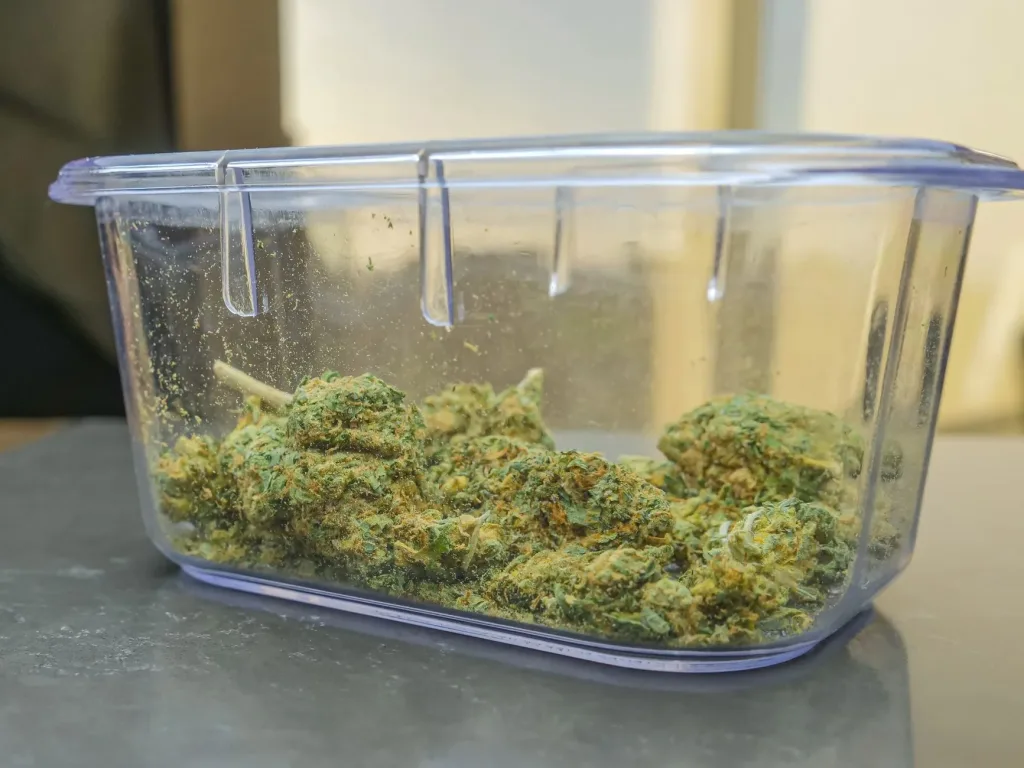
Where CBDA stays intact is in raw or cold-processed products. A few tinctures are made with cold extraction specifically to preserve the acid forms. Some people who use raw cannabis (juicing fresh leaves, for example) are working with mostly CBDA rather than CBD. And fresh, uncured flower that hasn’t been dried aggressively will have more CBDA still present than a bone-dry product that’s been sitting around.
Proper curing and storage actually slows down the natural degradation of cannabinoids, keeping more of them in their intended form longer. That’s one of the reasons well-cured flower from a careful grower holds up better on a lab panel over time.
If you’re after CBD products in any form, you can check out what we carry in Shop CBD Essentials to see what’s currently available.
CBDA and the bigger picture
CBDA doesn’t work in isolation. None of the cannabinoids do. The acid forms, the decarbed forms, the terpenes, they all interact. That’s the thinking behind the entourage effect, the idea that the whole profile of a plant does more together than any single compound does alone. CBDA is one piece of that picture, and it’s a piece that often gets ignored because it converts away so quickly once any heat is involved.
There’s still a lot being studied about cannabidiolic acid as a compound in its own right. What’s clear is that it’s genuinely present in raw cannabis, it converts predictably with heat, and reading it correctly on a label helps you understand what you’re actually getting.
Frequently asked questions
Is CBDA the same as CBD?
No. CBDA is the raw, unheated form of CBD. They’re closely related but chemically different. Heat converts CBDA into CBD, which is why smoked or vaped flower delivers CBD rather than CBDA.
Does CBDA get you high?
No. CBDA is non-intoxicating, just like CBD. Neither one produces a high.
Why does my flower’s lab panel show both CBDA and CBD?
Because both are present in unprocessed or lightly processed flower. The CBDA is the dominant form in raw bud; the small CBD number represents what’s already converted naturally during drying and curing. Some labs roll them into a single “total CBD” figure; others list them separately.
Do any products keep CBDA intact?
Some cold-processed tinctures and raw cannabis products are made specifically to preserve CBDA before heat converts it. Most smoked, vaped, and heat-extracted products have already converted the CBDA into CBD by the time you use them.
How does CBDA relate to THCA?
They’re parallel compounds. THCA is the raw acid form of THC, and CBDA is the raw acid form of CBD. Both convert into their active forms through heat, and both show up as separate entries on a proper lab panel. You can read more about how THCA works if you want to go deeper on that side of things.
Should I pay attention to CBDA when buying CBD products?
If you’re buying raw or cold-processed products, yes, CBDA tells you how much CBD potential is actually there. For anything that involves heat (vapes, pre-rolls, most oils), the CBDA will have already converted and the CBD number is what matters.