What Is THCV? The Connoisseur’s Guide to Cannabis’s Rarest Major Cannabinoid
Key takeaways
- THCV (tetrahydrocannabivarin) is a naturally occurring cannabinoid found in cannabis, but it’s rare: most strains carry very little of it.
- It’s structurally similar to THC but behaves differently, producing a sharper, shorter-lasting buzz at higher amounts.
- At lower amounts THCV doesn’t produce much of a noticeable high on its own, and it may actually blunt some of THC’s effects.
- African sativa landrace strains tend to carry the highest natural concentrations of THCV.
- If you want THCV in your session, look for flower with a lab-tested THCV percentage or seek out full-spectrum concentrates from high-THCV cultivars.
THCV, tetrahydrocannabivarin, is a naturally occurring cannabinoid in cannabis that’s structurally similar to THC but behaves quite differently. It shows up in tiny amounts in most strains, but in certain African sativas it can reach levels worth paying attention to.
What is THCV, exactly?
THCV is one of over a hundred cannabinoids found in the cannabis plant. Like THC, it’s psychoactive, but the way it hits is noticeably different, and the amount you’re consuming changes the picture a lot.
Here’s the basic chemistry in plain English. Regular THC has what chemists call a five-carbon side chain attached to its molecular structure. THCV has a three-carbon chain instead. That small difference changes how it fits into the receptors in your brain and body (the CB1 and CB2 receptors), which is why the two cannabinoids feel different even though they look similar on paper. For a deeper look at how all this receptor stuff works, the Tetrahydrocannabivarin Wikipedia entry covers the structural chemistry clearly.
THCV also starts out in the raw plant as THCVA (tetrahydrocannabivarolic acid), its acidic precursor. Heat converts THCVA into active THCV, the same way THCA converts into THC when you smoke or vaporise flower.
How does THCV actually feel?
This is the part most people are curious about. The honest answer is: it depends on how much is in what you’re consuming.
At lower concentrations, THCV behaves more like a blocker at the CB1 receptor. That means it can actually dial down some of THC’s effects, making the high feel a bit cleaner or less heavy, depending on your tolerance and the strain. Some people describe this as the weed feeling “clearer” or less couch-locked, though that’s largely driven by the overall cannabinoid and terpene profile, not THCV alone.
At higher concentrations, THCV becomes psychoactive on its own. The buzz it produces is often described as more energetic and clear-headed than a straight THC high. It also tends to come on quickly and wear off faster. So if you’ve ever smoked a bright, punchy African sativa and thought it felt unusually snappy, there’s a decent chance elevated THCV was part of that.
Tip: THCV’s effects are dose-dependent in a more dramatic way than most cannabinoids. A little of it can change how THC hits; a lot of it becomes its own thing. That’s worth keeping in mind when you’re reading a strain’s lab panel.
Where does THCV come from, and which strains carry it?
Most cannabis strains grown today carry THCV in trace amounts, often so low it barely registers on a lab test. The strains that naturally pack meaningful THCV levels are primarily African sativa landraces. Durban Poison is probably the most widely known example in the North American market. Some other southern and eastern African varieties carry it as well, though they’re much less common on Canadian shelves.
Breeders have been working on crossing high-THCV genetics into more commercially popular plants, so you do occasionally see modern hybrids with a notable THCV percentage on the label. It’s still not common, but it’s more findable than it was a few years ago.
The bottom line: if THCV is something you’re specifically chasing, read the lab panel on the package. A strain that just gets marketed as “sativa-forward” or “energetic” might have nothing to do with THCV. The numbers will tell you.
THCV vs. THC: a quick comparison
| Property | THC | THCV |
|---|---|---|
| Carbon chain length | Five carbons | Three carbons |
| Psychoactive? | Yes, at almost any dose | Only at higher concentrations |
| Effect on CB1 at low dose | Activates it | May block or partially block it |
| Duration of high | Longer | Shorter, faster onset |
| Common in most strains? | Yes | Rarely above trace levels |
| Strains known for it | Nearly universal | Durban Poison, select African sativas |
How to find THCV in products you can actually buy
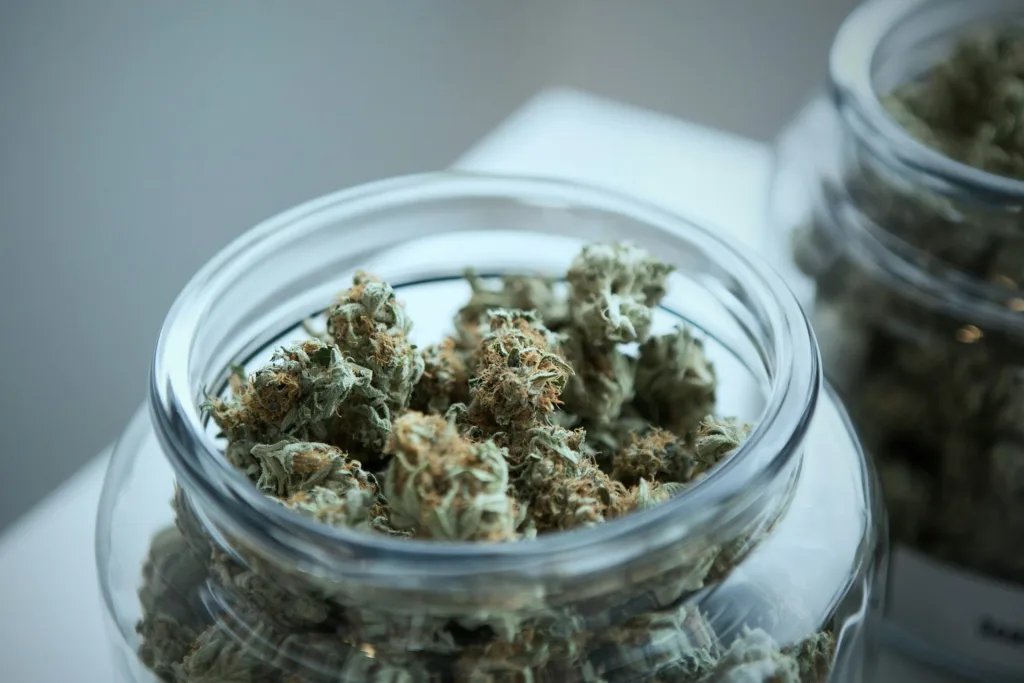
Flower is your most reliable starting point. Look for strains with a tested THCV percentage listed on the label, not just a vague “sativa” tag. A well-curated selection of Premium Flower (AAA) is the best place to start hunting for something that actually has the genetics and the lab numbers to back up the claim.
Concentrates made from high-THCV flower can also deliver more of it in a smaller serving, since you’re getting a more concentrated version of whatever’s in the original plant. This is one of the reasons full-spectrum products hold an edge over isolated distillates: a full-spectrum oil or hash made from a Durban-heavy cultivar will carry more of the original cannabinoid profile, including whatever THCV was present, rather than stripping it out during processing.
THCV is also starting to appear in a handful of edible and tincture formulations, though availability in the Canadian market is still limited. Keep an eye on the panel, and don’t take “contains THCV” at face value without a milligram count or percentage to go with it.
How THCV fits into the bigger cannabinoid picture
THCV isn’t a replacement for THC and it’s not trying to be. Think of it as one more variable in a complex plant. Strains with elevated THCV alongside high THC can produce a noticeably different kind of session than a straight high-THC indica. Pairing that with CBG, which also leans toward an uplifting, clear character, is something experienced buyers often chase in specific sativa-forward cultivars.
If you’re the kind of buyer who reads the full lab panel and cares about what’s actually in your weed beyond just the main THC number, THCV is absolutely worth understanding. It’s rare enough that finding it in meaningful amounts is almost a mark of craft sourcing on its own.
Frequently asked questions
Is THCV legal in Canada?
THCV is a naturally occurring cannabinoid in cannabis, so it falls under the same rules as any other cannabinoid present in licensed cannabis products sold in Canada. If it’s in a product on the shelf, it’s fair game.
Will THCV get you high?
At low concentrations, not noticeably on its own, and it can actually reduce some of THC’s effects. At higher concentrations, yes, it produces its own psychoactive buzz, typically described as energetic and shorter-lasting than a standard THC high.
What strains have the most THCV?
African sativa landraces carry the highest natural levels, with Durban Poison being the most accessible example in North America. Some modern hybrids bred from those genetics also carry elevated THCV, but you need to check the actual lab panel to know for sure.
Does THCV show up differently on a lab test than THC?
Yes, labs can test for THCV separately and will list it on a full cannabinoid panel. It’s a distinct compound and appears as its own line item, usually well below the THC percentage in most strains, unless you’re looking at a specifically high-THCV cultivar.
Can I find THCV in concentrates or edibles, not just flower?
You can, though it’s less common than in flower. Full-spectrum concentrates made from high-THCV strains will carry it through. Some edible and tincture makers are starting to add it to their formulations, but availability in the Canadian market is still growing. Always look for a specific milligram count or percentage on the label.
Is THCV the same as delta-8 or other THC variants I keep hearing about?
No. THCV, delta-8, and delta-9 (standard THC) are all different molecules with different structures and different effects. Delta-8 is a structural isomer of delta-9 THC. THCV is a completely separate cannabinoid, a “varin” compound, meaning it has that shorter three-carbon chain. They’re related in the way cousins are related, but they’re not the same thing.